How to Identify Mold Under Carpet Before It Spreads
@getidentifymoldundercarpetpost
Why Hidden Mold Under Carpet Is a Serious Problem
If you have ever pulled back a corner of carpet in a basement or a room that has smelled musty for weeks, you know the sinking feeling when you spot dark stains on the subfloor. That discoloration is often the first visible clue of carpet mold. But what about the areas you cannot see? Mold can grow under carpet for months before you notice any change in the carpet's surface. By the time you smell that earthy, damp odor, the hidden mold has likely already established itself in the carpet padding and the subfloor beneath.
Learning how to identify mold under carpet early can save you from extensive water damage restoration costs down the road. It can also protect your family's health. Mold spores are tiny and easily become airborne when you walk across a contaminated carpet. Once they enter your HVAC system, they can spread to every room in your home. That is why a proactive mold inspection is so important, especially in areas with a history of moisture problems.
What Causes Mold to Grow Under Carpet?
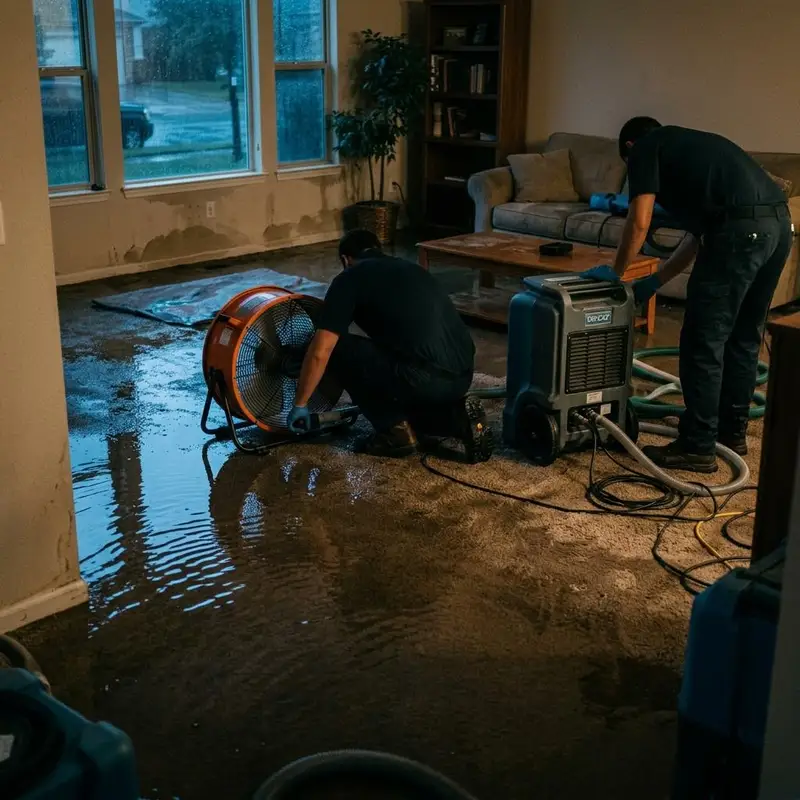
Mold needs three things to thrive: moisture, a food source, and darkness. Carpet provides the food source in the form of organic dust, dirt, and the fibers themselves. The space under the carpet is almost always dark and poorly ventilated. So the only variable you can control is moisture. Common sources include plumbing leaks, high humidity, flooding, or condensation from a cold slab. A crawl space with poor drainage or a missing vapor barrier can also send moisture up through the concrete into the carpet above.
Once moisture gets trapped under the carpet, the environment becomes ideal for carpet mold, black mold, and mildew. The longer the moisture sits, the deeper the mold penetrates into the carpet padding and the subfloor. That is why you need to know how to identify mold under carpet before the problem grows out of control.
Signs That Mold Is Growing Under Your Carpet
Some signs are obvious, but others are subtle. Here is what to look for:
- A musty, persistent smell that gets stronger when the room is closed up or the humidity rises.
- Visible discoloration on the carpet surface, often in rings, spots, or a general darkening near walls or baseboards.
- Warped or buckled carpet, especially along seams or around door frames, which indicates the subfloor or padding is swollen with moisture.
- Allergy symptoms that appear or worsen after you spend time in the room, such as sneezing, watery eyes, or a scratchy throat. This can indicate a high spore count in the air.
- Condensation on windows or walls in the same room, which points to a humidity problem that affects the floor as well.
If you notice any of these signs, it is time to do a closer inspection. Do not assume the smell will go away on its own. Mold will keep growing until the moisture source is removed and the affected materials are cleaned or replaced.
How to Identify Mold Under Carpet Step by Step
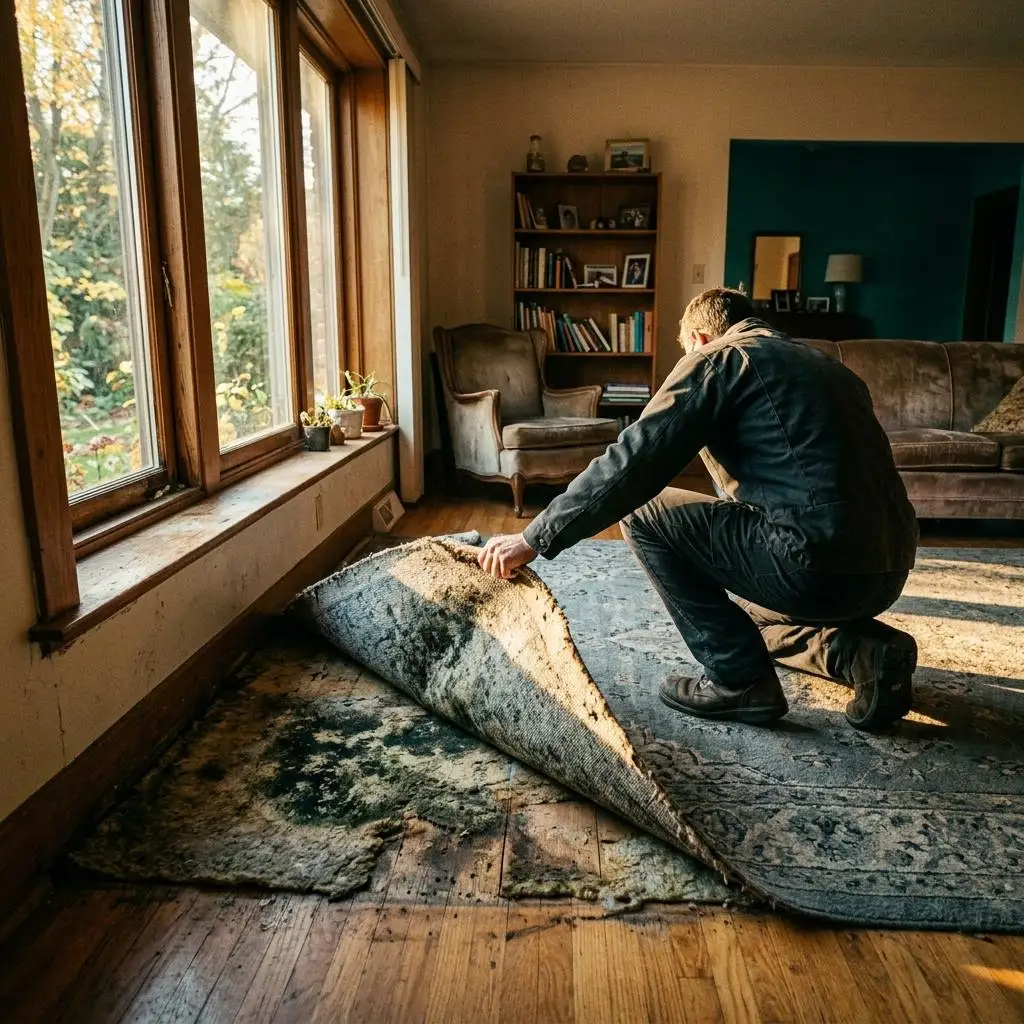
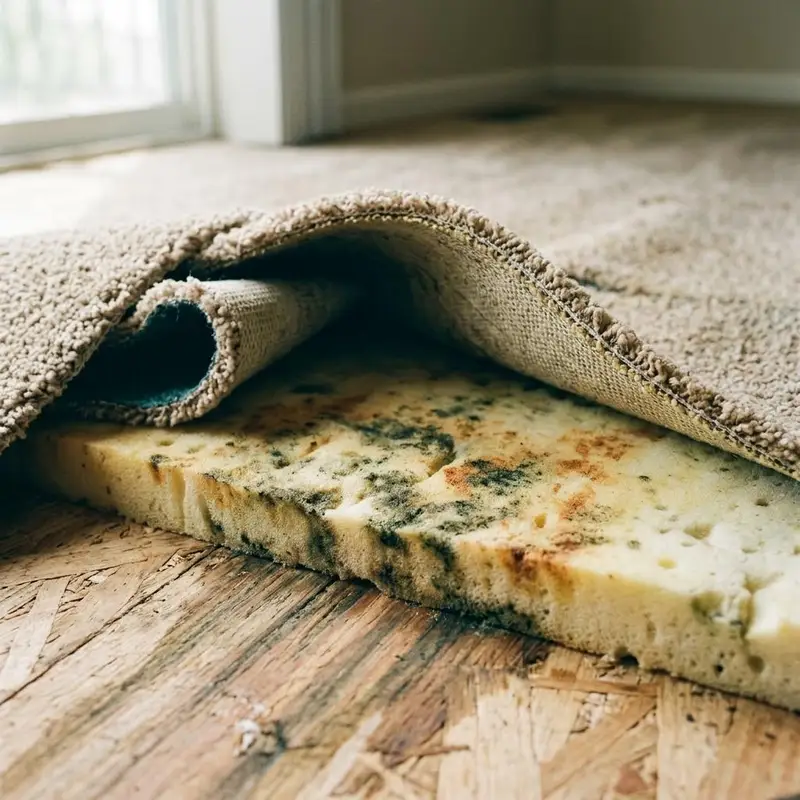
The only way to be certain is to look. But you do not have to rip up the entire floor to start. Begin by lifting a corner of the carpet in a suspicious area, preferably near a wall or a spot where you have seen water stains. Wear gloves and a mask to avoid direct contact with spores. Check the back of the carpet and the carpet padding for dark patches, green or black spots, or a slimy texture. If you see any of these, you have found carpet mold.
A moisture meter is a helpful tool for this kind of inspection. It measures the moisture content of the subfloor and the padding without having to cut into the material. If the reading is above 15 percent, conditions are ripe for mold growth. You can buy a moisture meter at a hardware store or hire a professional for a thorough mold inspection. Professionals use moisture meters along with air quality testing to get a complete picture of the problem.
Another method is to press down on the carpet with your hand or a clean cloth and see if any moisture wicks up. If the padding feels damp or the subfloor feels soft under pressure, you likely have hidden mold. The key is to identify mold under carpet while it is still localized. Once it spreads across a large area, mold remediation becomes more expensive and disruptive.
The Role of Air Quality Testing
Sometimes the carpet looks fine but the air tells a different story. Air quality testing measures the spore count in the room and compares it to outdoor levels. If indoor spore counts are significantly higher, especially with species like black mold or mildew, that is a strong indicator that mold is growing somewhere hidden. Testing is especially useful if you cannot easily lift the carpet or if the room has a complicated layout with furniture that is hard to move.
Air quality testing also helps guide the remediation process. If the test shows a high concentration of spores, you know you need more than just a surface cleaning. You may need to remove the carpet, treat the subfloor, and address the underlying moisture issue. Without testing, you are guessing, and with mold, guessing often means missing a patch that will grow back later.
What to Do When You Find Mold Under Carpet
If you confirm that mold is present, do not try to clean it with bleach alone. Bleach can kill mold on nonporous surfaces, but carpet and padding are porous. Bleach does not penetrate deep enough to stop the roots, and it can actually make the problem worse by adding moisture to the material. A better approach for small areas is to use a solution based on borate, which is a natural compound that kills mold and prevents regrowth. For larger infestations, professional mold remediation is the safest route.
The first step in remediation is to remove the contaminated carpet and padding. Then the subfloor must be dried thoroughly. If the subfloor is wood, it may need to be sanded or replaced if the mold has caused rot. Concrete subfloors can often be cleaned and sealed, but they must be completely dry first. This is where a dehumidifier becomes essential. Running a dehumidifier in the room for several days after the removal helps pull residual moisture out of the air and the floor structure.
After the area is dry and clean, you can install new carpet or another flooring material. But before you do, consider installing a vapor barrier if the room is over a crawl space or a concrete slab. A vapor barrier is a plastic sheet that blocks moisture from rising into the floor system. It is one of the most effective ways to prevent future mold growth under carpet.
Preventing Mold Under Carpet Long Term
Prevention is easier than remediation. Keep indoor humidity below 50 percent, especially in basements and rooms with carpet. Use a dehumidifier during humid months. Fix leaks immediately. If you have a crawl space, make sure it is properly ventilated and that the ground is covered with a vapor barrier. Regular mold inspections, even when you do not see a problem, can catch moisture issues before they become mold issues.
If you have children or anyone with allergies or asthma in the home, pay extra attention to the Allergy and Air Quality in rooms with carpet. Vacuum regularly with a HEPA vacuum to reduce dust and spores that settle into the fibers. But remember, a HEPA vacuum cleans the surface. It cannot remove mold that is growing under the carpet or in the padding. Only direct inspection can reveal that.
When to Call a Professional
Some situations are too risky or too large to handle yourself. If the affected area is more than a few square feet, or if you suspect the mold is black mold, call a professional. The EPA recommends professional remediation for extensive mold growth because improper handling can spread spores throughout the house. Professionals have the equipment, training, and experience to safely remove the mold and restore the area. They also have access to commercial-grade dehumidifiers, HEPA vacuums, and antimicrobial treatments that are not available to the average homeowner.
If you have a history of water damage restoration in your home, or if the room has flooded before, you are at higher risk for hidden mold. Do not wait until the smell forces you to act. The earlier you identify mold under carpet, the less damage it will cause to your home and your health.